
 Travel Security Guide
Hotel Wi‑Fi is Not Home Wi‑Fi
Whether you are checking in at a resort in Bali or connecting to airport transit Wi-Fi, open networks expose your banking sessions, credentials, and work communications. Here is what happens behind the scenes and how to stay safe in under 20 seconds.
The Real Risks of Public Networks
Public hotspots are unencrypted at the radio layer. Anyone sitting in the same lobby running a packet sniffer can inspect unencrypted traffic, while rogue "Evil Twin" access points can impersonate legitimate hotel networks.
- DNS Hijacking & Tracking: Hotel routers inspect which domains you visit to sell analytics or inject ads.
- Credential Harvesting: Malicious captive portals simulate login screens to capture passwords and OAuth tokens.
- Session Hijacking: Unprotected background background apps without certificate pinning can leak auth tokens.
Why Legacy VPNs Get Blocked in Hotels
Have you ever turned on your traditional VPN in a hotel only to lose internet connectivity completely? Hotel firewalls specifically drop traffic on typical VPN ports:
| Protocol | Port & Traffic Signature | Hotel Firewall Result |
|---|---|---|
| OpenVPN | UDP 1194 (Obvious headers) | Blocked by default |
| WireGuard | UDP 51820 (Predictable handshake) | Frequently throttled/blocked |
| PrivacyFrontier (VLESS Reality) | TCP 443 (Pure TLS 1.3 disguise) | 100% Passes as normal web browsing |
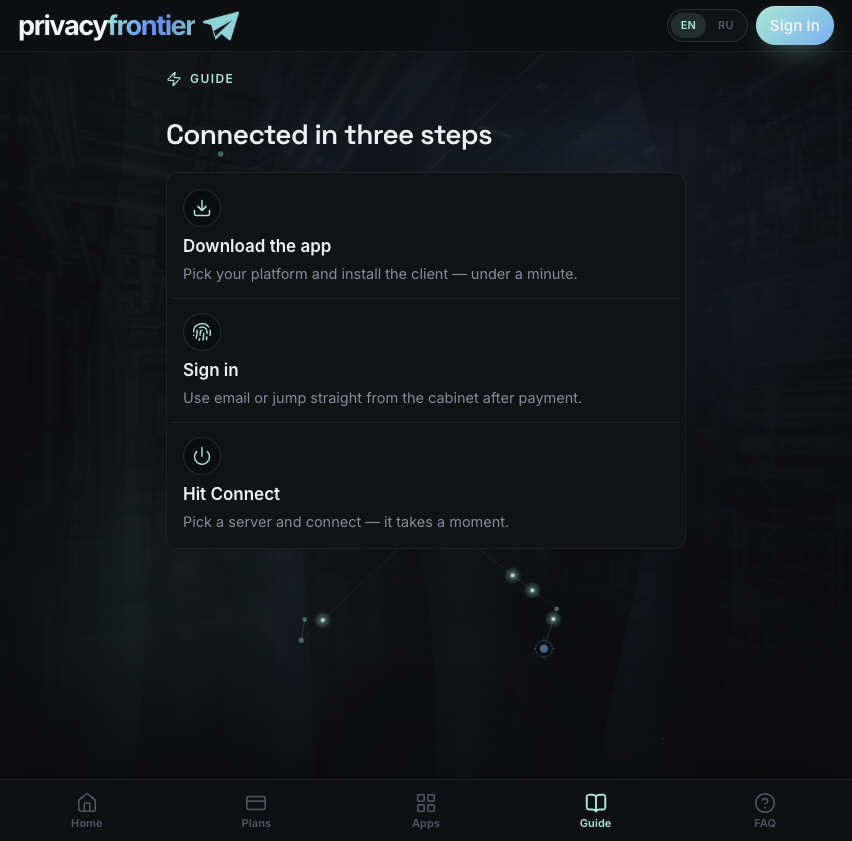
3-Step Defense Plan Before Opening Sensitive Apps
- Authenticate on the Captive Portal: Agree to hotel terms and get IP assignment before enabling encryption.
- Launch PrivacyFrontier: Open the Telegram Mini App or Web App and tap Connect. Your tunnel establishes over port 443.
- Verify Encryption: Once connected, open Slack, banking, client portals, and work email with full end-to-end privacy.
Frequently Asked Questions
Can hotel staff see what websites I visit while using PrivacyFrontier?
No. When connected via VLESS Reality, all DNS requests and web payloads are encrypted end-to-end. The hotel router only sees encrypted TLS 1.3 packets directed to legitimate servers.
Will this drain my phone battery on long travel days?
No. Unlike resource-heavy legacy clients that run continuous heavy background daemons, PrivacyFrontier leverages native kernel-level routing through lightweight clients like FoXray and Sing-box, saving up to 40% more battery.
What if I only need it for a quick 2-day transit?
We provide a 3-day full-speed Trial for just $0.50 so you don't have to commit to expensive 1-year or 2-year lock-in plans from commercial providers.